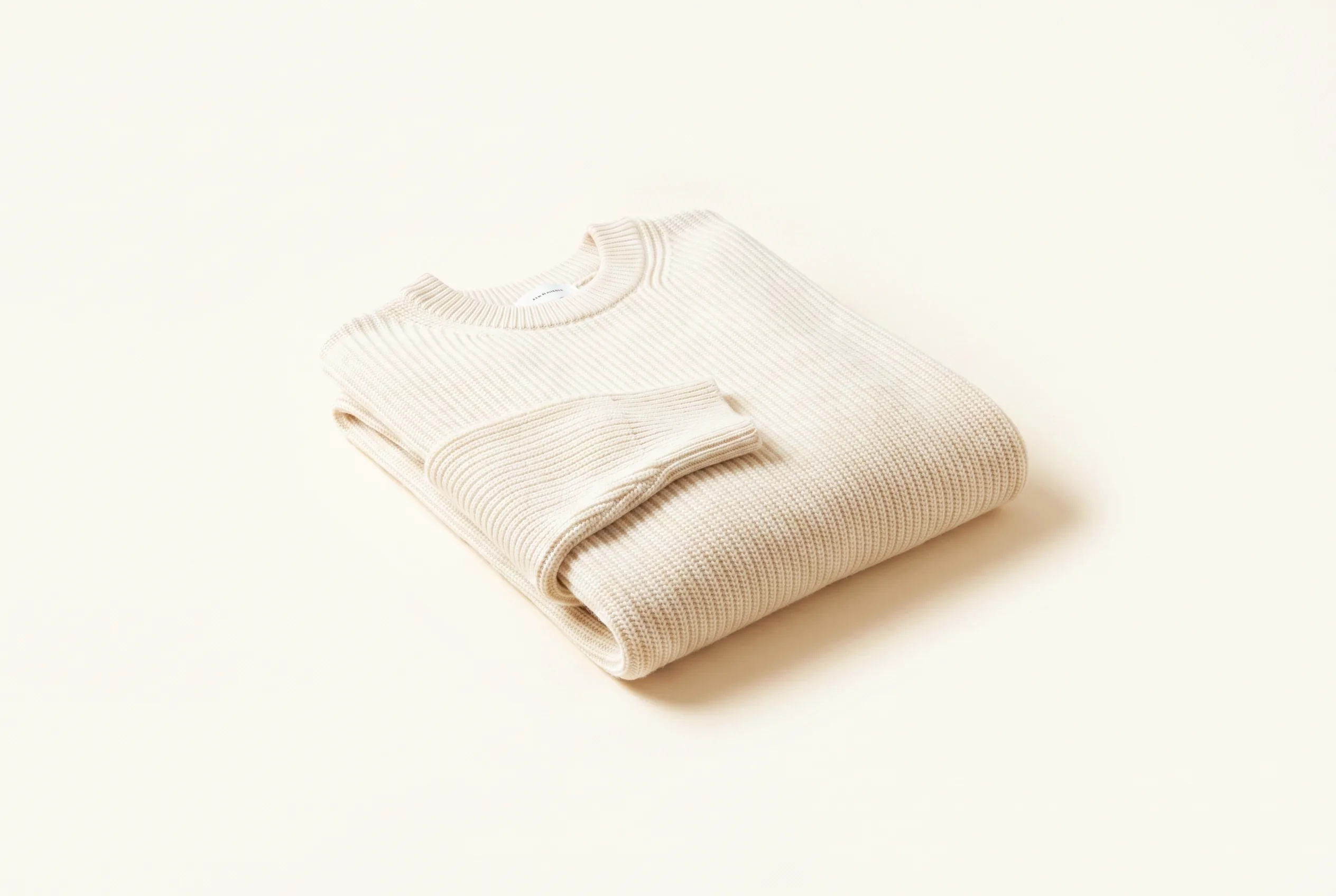
There is a moment, standing in front of a full closet, when the sentence arrives on its own: I have nothing to wear. It is almost never true. What it usually means is something quieter and harder to say — I can't see what I have, I don't remember why I bought half of it, and nothing in here feels like the person I'm trying to be today.
The fashion industry has one answer to that feeling, and it is always the same answer: more. A new season, a new drop, a new version of you available at checkout. It is not a conspiracy; it is just a business model. But it has a side effect worth naming. It trains you to treat your own closet as the before picture — a problem that shopping exists to solve — when for most people the closet is not the problem at all. The problem is that it has become invisible.
Think about the pieces you actually reach for. Most wardrobes run on a small rotation: the trousers that fit exactly right, the knit that works over everything, the coat that makes the whole outfit look decided. Study after study of real closets finds the same shape — a small share of pieces doing most of the wearing, and a long tail of clothes that are owned but not worn. The long tail is not evidence that you need better things. It is evidence that good things go unseen.
Wearing what you own is sometimes framed as a discipline, a kind of fashion austerity. That framing gets it backwards. The people whose style you admire are rarely the ones with the most clothes; they are the ones who repeat themselves with conviction. The same coat, worn often, becomes a signature. The same boots, resoled twice, become a fact about you. Repetition is not a failure of imagination — it is what style looks like from the outside once someone has decided who they are.
There is a practical case too, and it is not small. The most sustainable garment is the one that already exists; no supply chain is cleaner than a hanger. Every wear you give a piece divides its cost and its footprint by one more. And there is an honesty in it: a closet you actually use is a record of your real life, not the imagined one that shopping is so good at selling.
None of this requires renouncing anything. New pieces have their place — when something is genuinely missing, buying it well is part of the craft. The shift is in the order of operations. Look first. Style what's there. Let the gap prove itself before you fill it. Most days, the outfit you were about to buy is already in the house, waiting to be put together by someone paying attention.
A fair objection: doesn't this just move the effort from spending money to spending time? A little, at first. But the time compounds in a way the money never did. Learn that the grey trousers carry three different jackets and you have learned it forever; the outfit that took ten minutes to find on Tuesday takes ten seconds by March. Shopping resets to zero with every purchase. Attention accrues.
That attention is the whole practice. Photograph your pieces, or lay them out, or simply take an evening to look — and the closet stops being a storage problem and starts being a vocabulary. You'll find sentences in there you have never said. Some of them will surprise you.
era. is being built for exactly this — seeing, styling, and wearing the closet you already own. If that sounds like your kind of dressing, the waitlist is open, quietly.