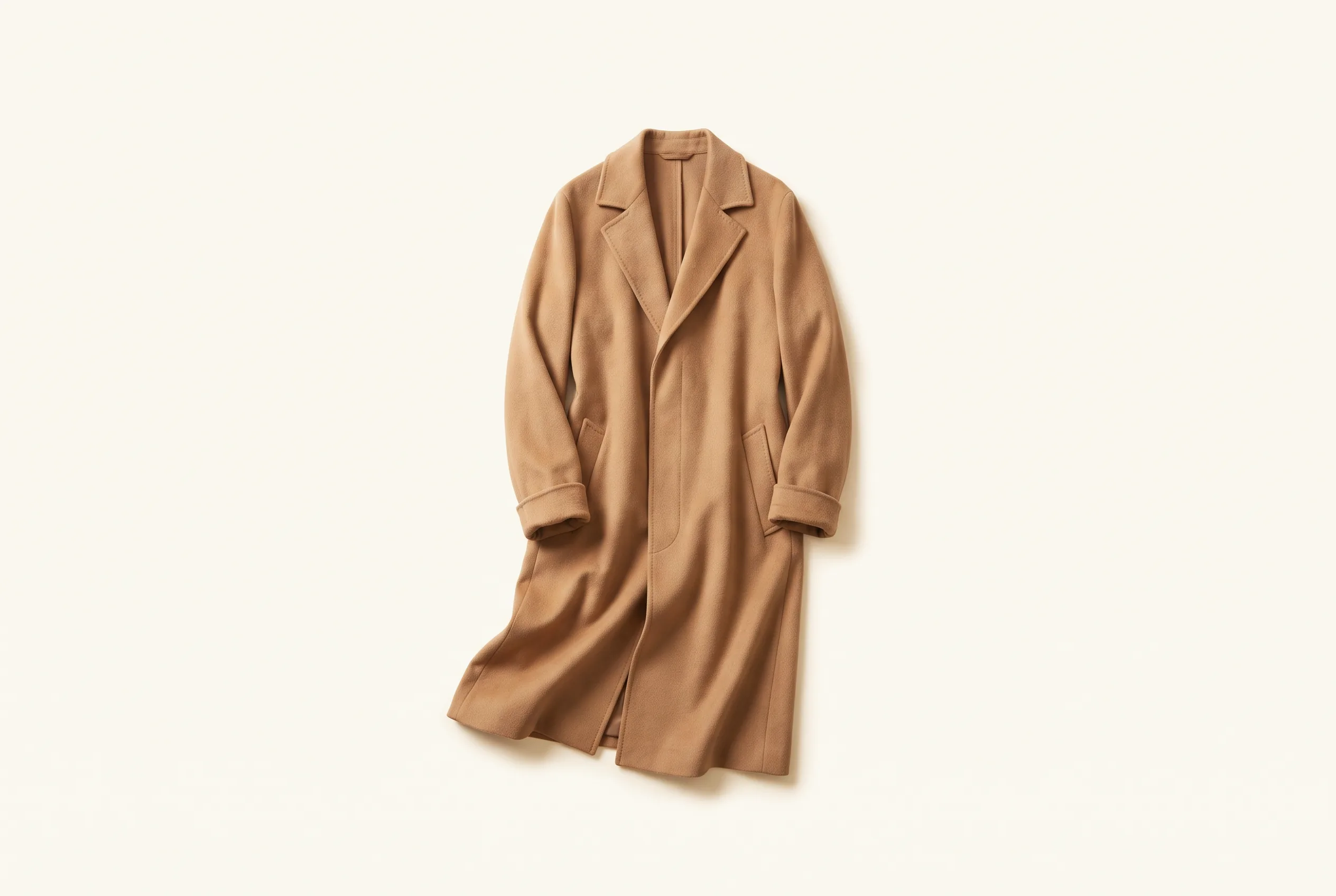
Here is the whole idea, and it fits in one line: take what a piece cost, and divide it by the number of times you have worn it. That is cost per wear. No spreadsheet required, no philosophy degree, no guilt. Just a division problem that happens to change how a closet feels.
Worked gently: a coat that cost the equivalent of a nice dinner for four, worn sixty-one times across two winters, has quietly become cheaper per wearing than the coffee you drank while wearing it. Meanwhile the going-out top that cost almost nothing and went out once is — per wearing — one of the most expensive things you own. The price tag told you one story at the register. The wearing tells you the true one, slowly.
This is why cost per wear is gentle rather than strict. It never scolds you at the moment of purchase, the way budgets do. It simply waits, and lets your actual life vote. Every morning you reach for something, that piece gets a little cheaper; everything you pass over holds its price forever. The closet becomes a ledger you write with your hands, without ever opening an app or making a resolution.
A few things follow from the arithmetic, and they are kinder than the fashion rules they replace.
Repeating outfits becomes a win, not a lapse. Every repeat is the number going down — the outfit literally improving with use. The industry needed you to feel that repetition was a failure; the division says otherwise.
"Expensive" and "cheap" trade places. A well-made boot at four times the price, worn four hundred times, embarrasses the bargain pair that cracked in a season. Not always — price is no guarantee of wearings — but often enough that the question at the register changes shape. Not "can I afford this?" but "will I wear this fifty times?" The second question is better at protecting your money than the first.
And the closet's quiet corners become visible. That piece with the tags still on is not a moral failing; it is just a number that never started moving. You can start it — style it this week, see if it earns a place — or you can let it go to someone whose wearing will bring its number down. Either way the shame evaporates, because the frame was never about virtue. It was about use.
One caution, so the gentleness stays honest: cost per wear is not a permission slip. A low number does not make the next purchase free, and the math can be gamed by anyone determined to justify a want — wear anything eleven times out of stubbornness and the division will flatter you. The idea works best pointed backward, at what you already own, where it turns out most closets are sitting on their best value unworn.
It also quietly reframes gifts and splurges. The question to ask before the beautiful, impractical thing is not whether it costs too much but what its wearings will realistically be — and sometimes the honest answer is 'eight, and each one will be a great evening,' which is a perfectly good deal if you make it with open eyes. The division doesn't forbid romance. It just asks romance to state its price per dance.
Which is the real point of the note. The best cost per wear in your wardrobe belongs to something already hanging there, and the fastest way to improve it costs nothing at all: wear the good things more.
Counting the wearings is the tedious part — and it is the part era. does for you, piece by piece, gently. The waitlist is open when you are.